palaniappan p8 min
AWS Blocks Preview: Local Backends, Zero-Change Deploy
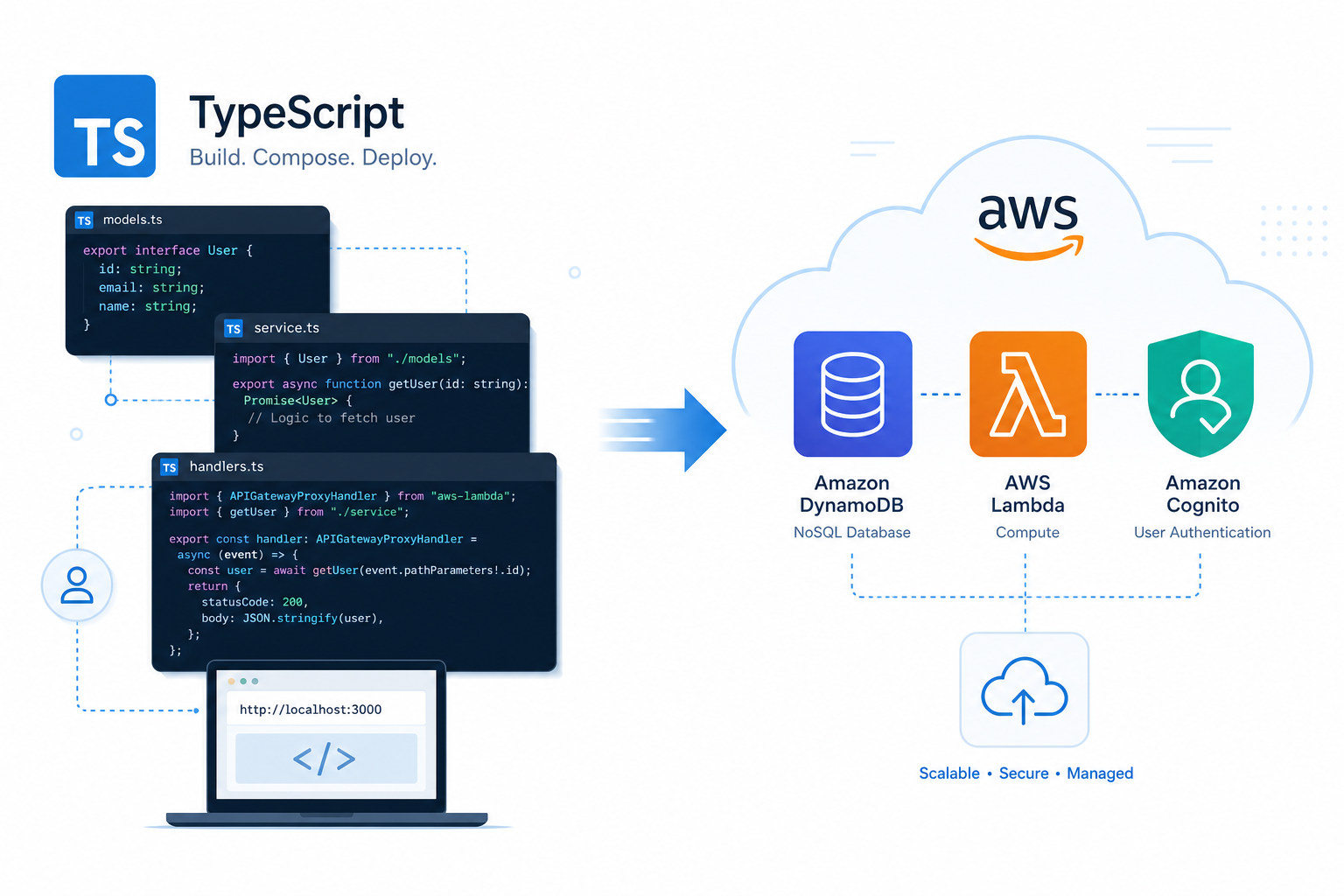
AWS Blocks (public preview, June 2026): 18+ open-source TypeScript building blocks that run locally without an AWS account and deploy with zero code changes.

FactualMinds Blog
Expert perspectives on AWS cloud consulting, generative AI, and enterprise solutions.
AWS Blocks (public preview, June 2026): 18+ open-source TypeScript building blocks that run locally without an AWS account and deploy with zero code changes.
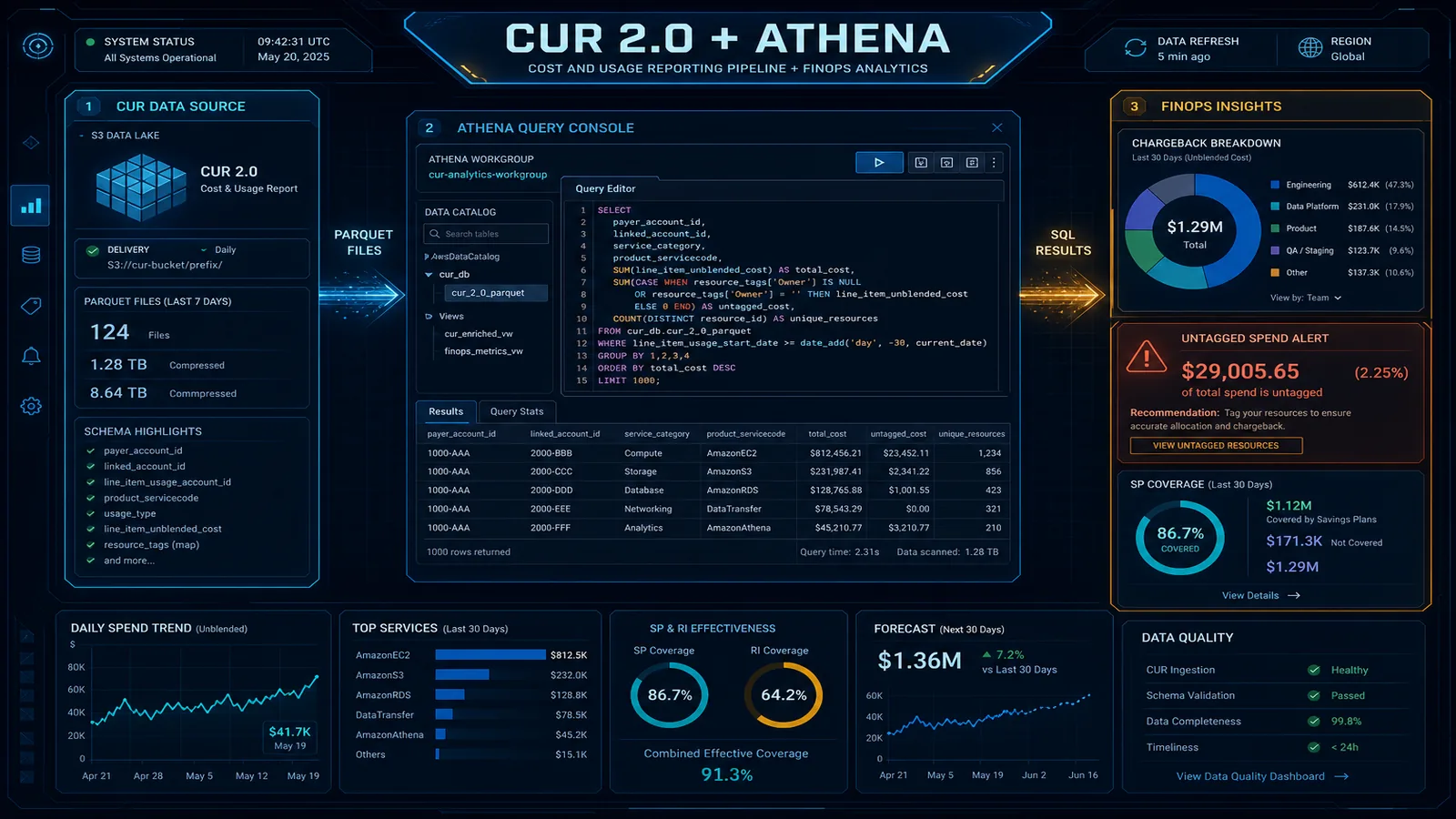
CUR 2.0 (generally available 2024, default for new exports in 2025) adds line-item resource IDs and Savings Plan attribution columns Athena needs for serious chargeback. A standard FinOps query pack answers top-10 services, untagged spend, and SP coverage in under 60 seconds.
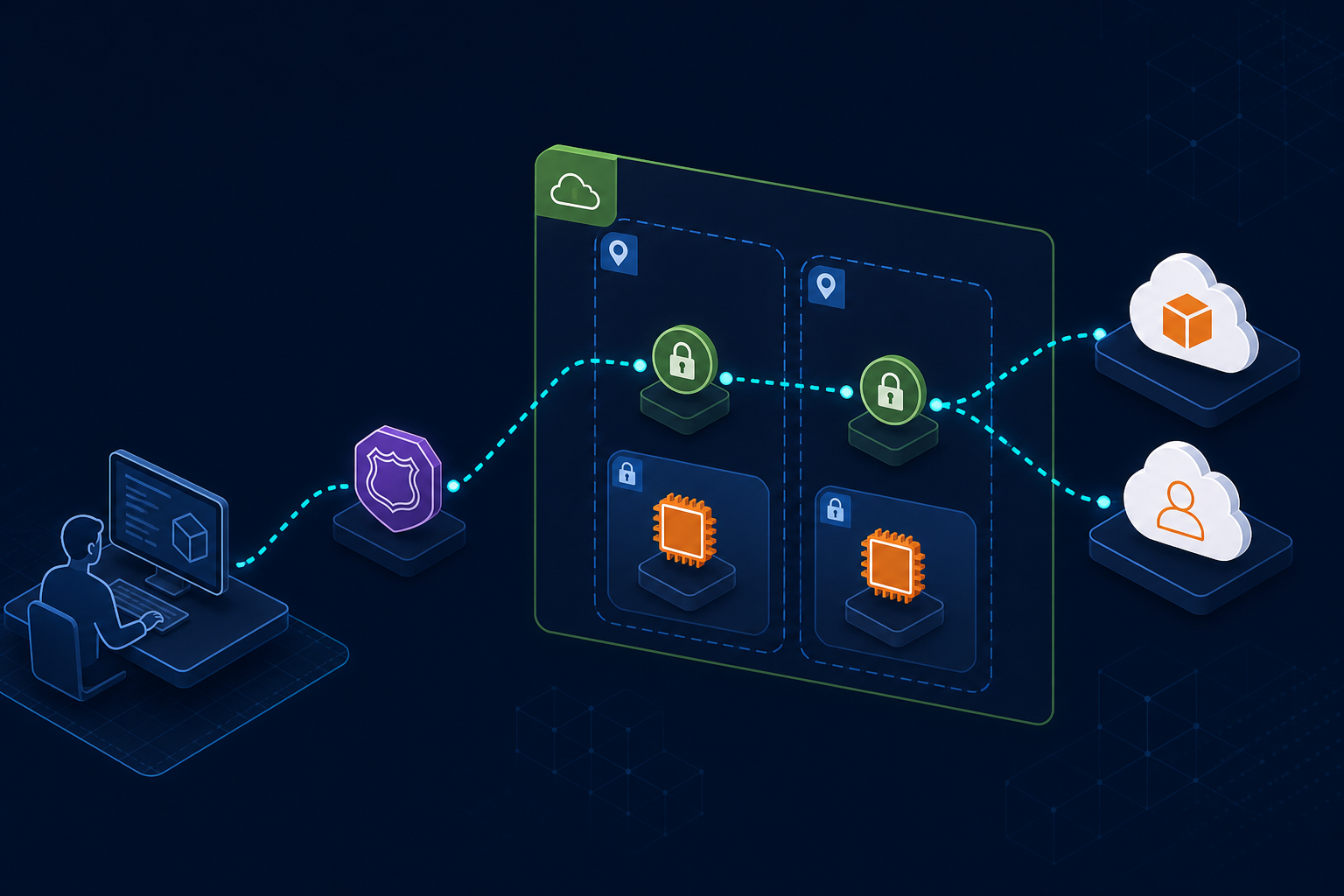
On June 15, 2026 AWS made Console Private Access work without internet — VPC endpoints route 100% of browser traffic. First-party benchmark: 161 interface endpoints and ~$263/mo for a 12-service 3-AZ pilot in us-east-1.
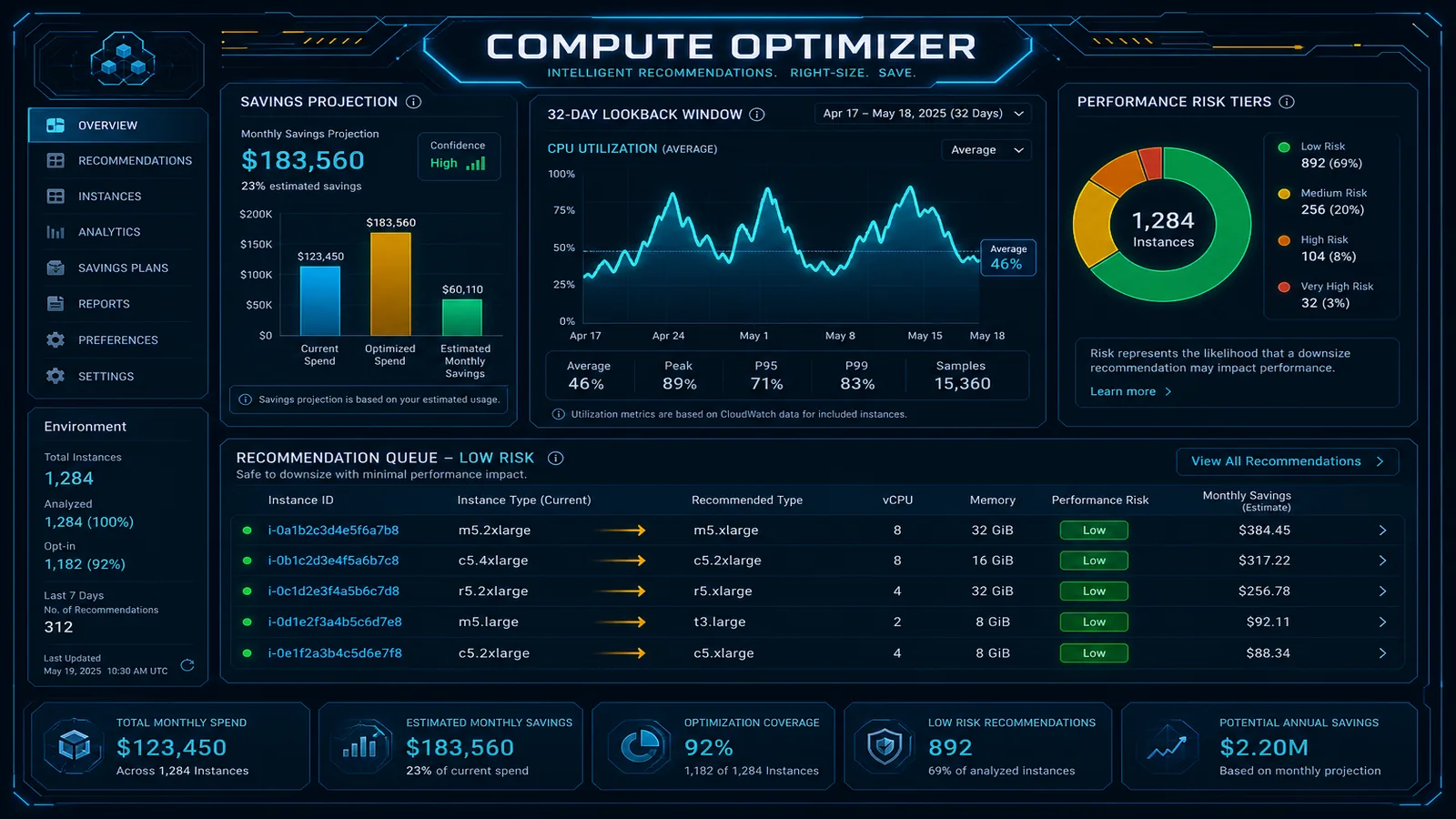
Compute Optimizer added 32-day lookback for cyclic workloads in 2025 — critical for monthly batch jobs that looked oversized on 14-day windows. In a June 2026 audit of a $48k/mo account, rightsizing recommendations alone modeled $11k/mo savings at low performance risk.
Aurora bills instance hours plus storage plus I/O — or storage at a 125% premium with I/O bundled (I/O-Optimized). Serverless v2 at $0.12 per ACU-hour wins on variable workloads, loses on steady traffic above 4 ACU. Global Database doubles the price per secondary region plus replicated-write fees. Backtrack adds per-change-record cost most teams never factor in.
Bedrock AgentCore is metered across twelve distinct components — Runtime, Browser, Code Interpreter, Gateway, Identity, Memory (two tiers), Observability, Evaluations, Payments, Search, and the underlying model spend. Two of them drive 80% of the bill.
CloudFront bills $0.085/GB egress in North America tiered down to $0.020/GB at extreme volume, plus $0.0075–$0.0100 per 10K requests, plus origin egress. Regional price classes drop the bill 30–60% by skipping expensive geographies. Real-time logs at $0.01 per million entries surprise high-traffic sites. Lambda@Edge is dramatically more expensive than CloudFront Functions.
CloudWatch bills across ten distinct dimensions — Logs ingestion at $0.50/GB, Logs storage, custom metrics with cardinality multipliers, alarms tiered by resolution and type, dashboards at $3 each, Synthetics canary runs, RUM events, X-Ray traces, Container Insights, and cross-region replication. Logs ingestion is the largest line on most accounts.
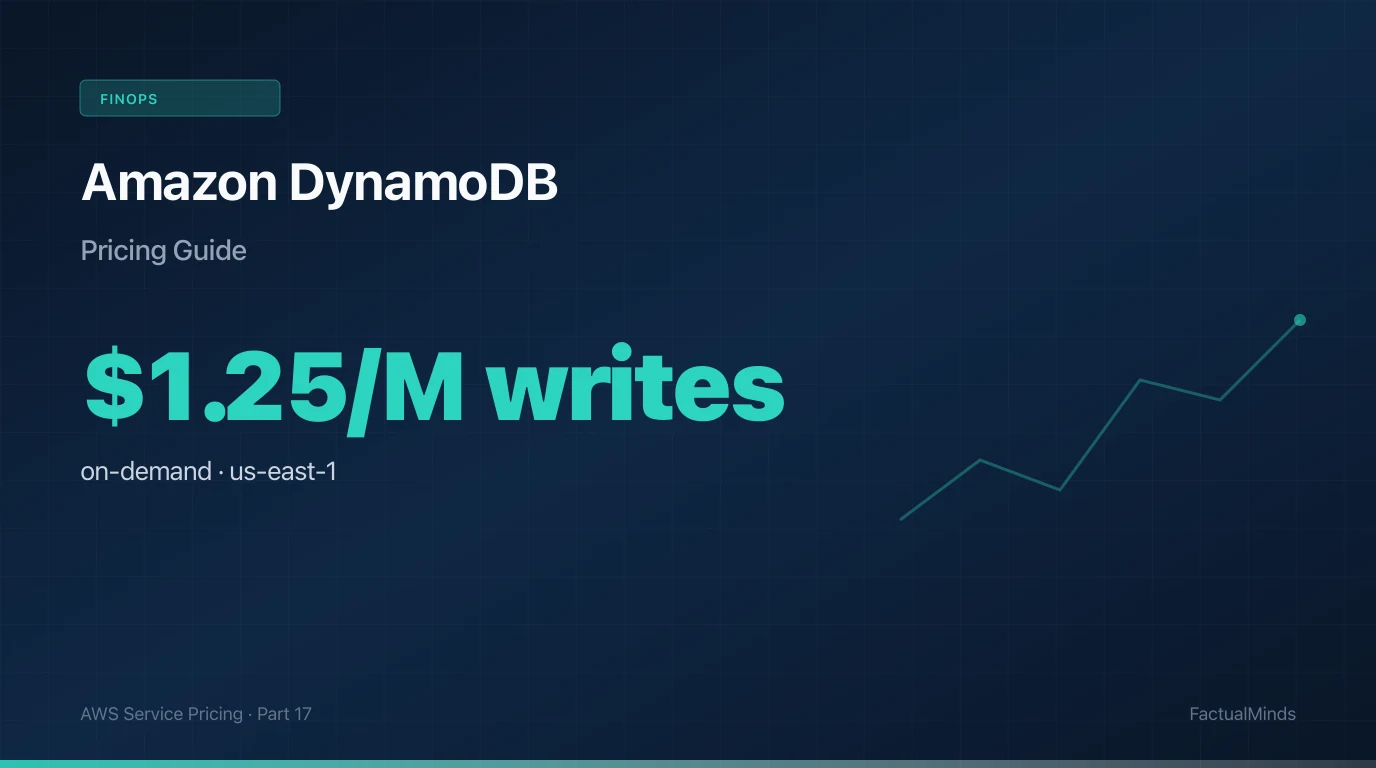
DynamoDB on-demand bills $1.25 per million writes and $0.25 per million reads — pay-per-request convenience with no capacity planning. Provisioned at $0.00065/WCU-hour wins on steady traffic above ~50% utilization. Every GSI doubles the write cost, IA tier cuts storage 60% but adds 25% to request fees, and Global Tables compound the bill per region.
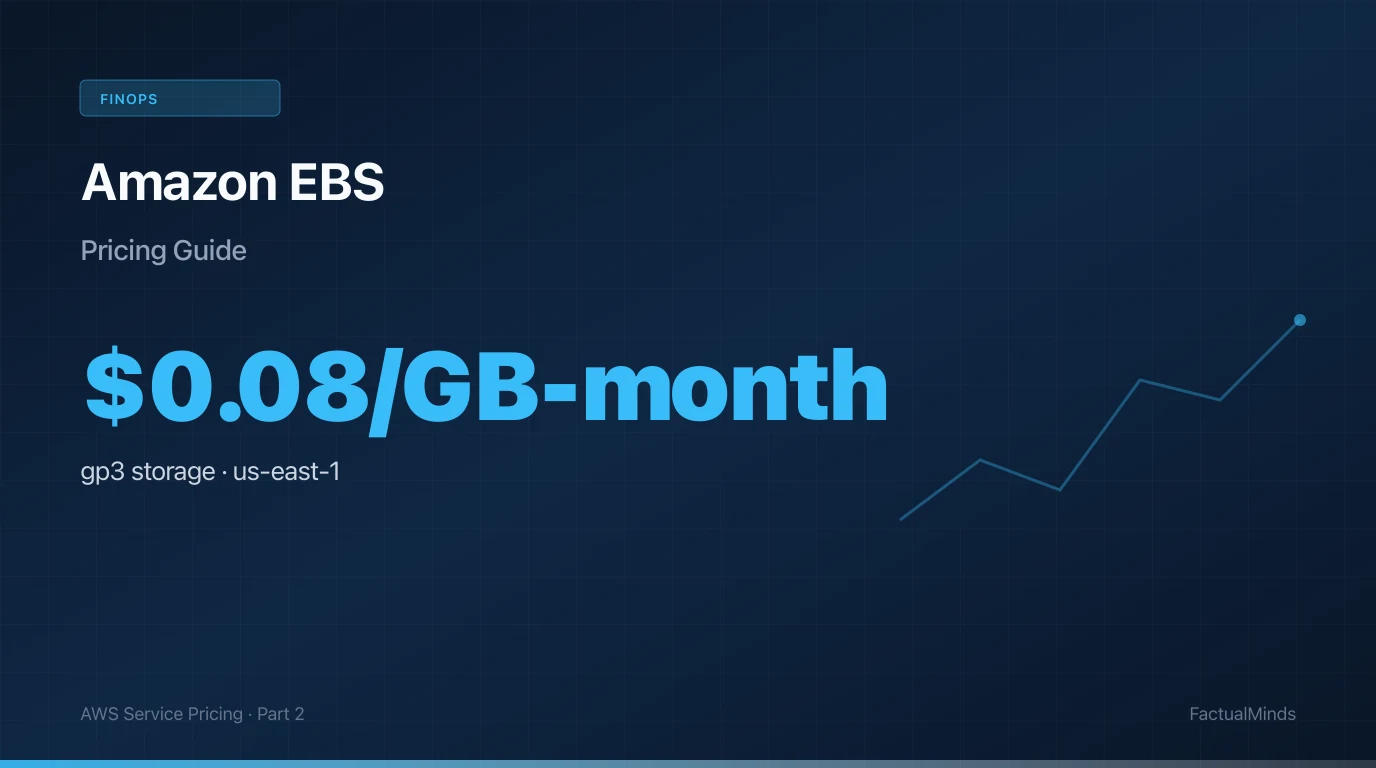
EBS is billed across six dimensions — gp3 storage at $0.08/GB-month, separate IOPS and throughput line items, io2 Block Express, snapshots at $0.05/GB-month, fast snapshot restore at $0.75/DSU-hour. Deleting an EC2 instance never stops the volume bill, and the gp2→gp3 migration is one of the cleanest 20% wins in cloud cost.
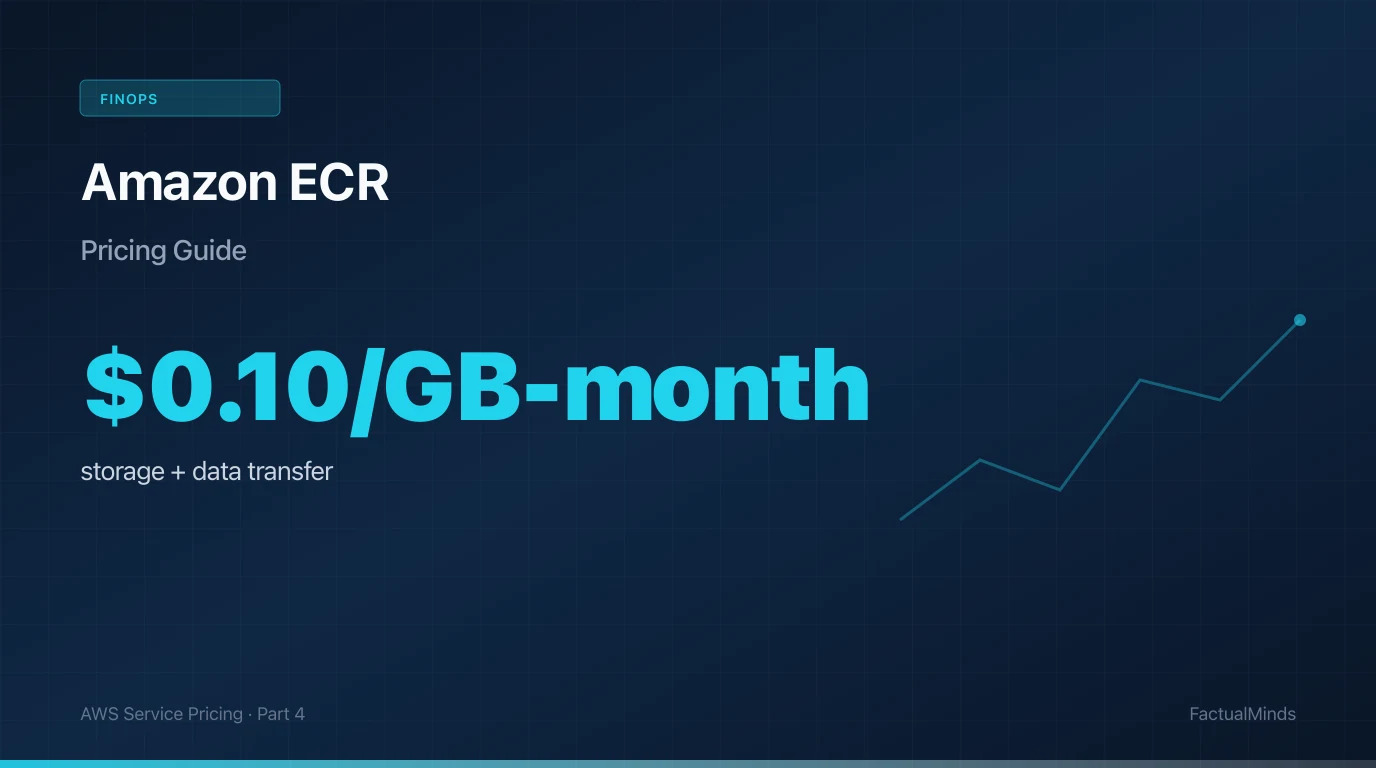
ECR storage is $0.10/GB-month — twice S3 Standard. Cross-region replication doubles or triples that. Enhanced scanning bills $0.09 per image scanned, on every push. Pull-through caches for Docker Hub and ECR Public add storage plus data-transfer-in. A 200-service organization with 10 environments and 3 regions can spend more on ECR than on the EKS clusters pulling from it.
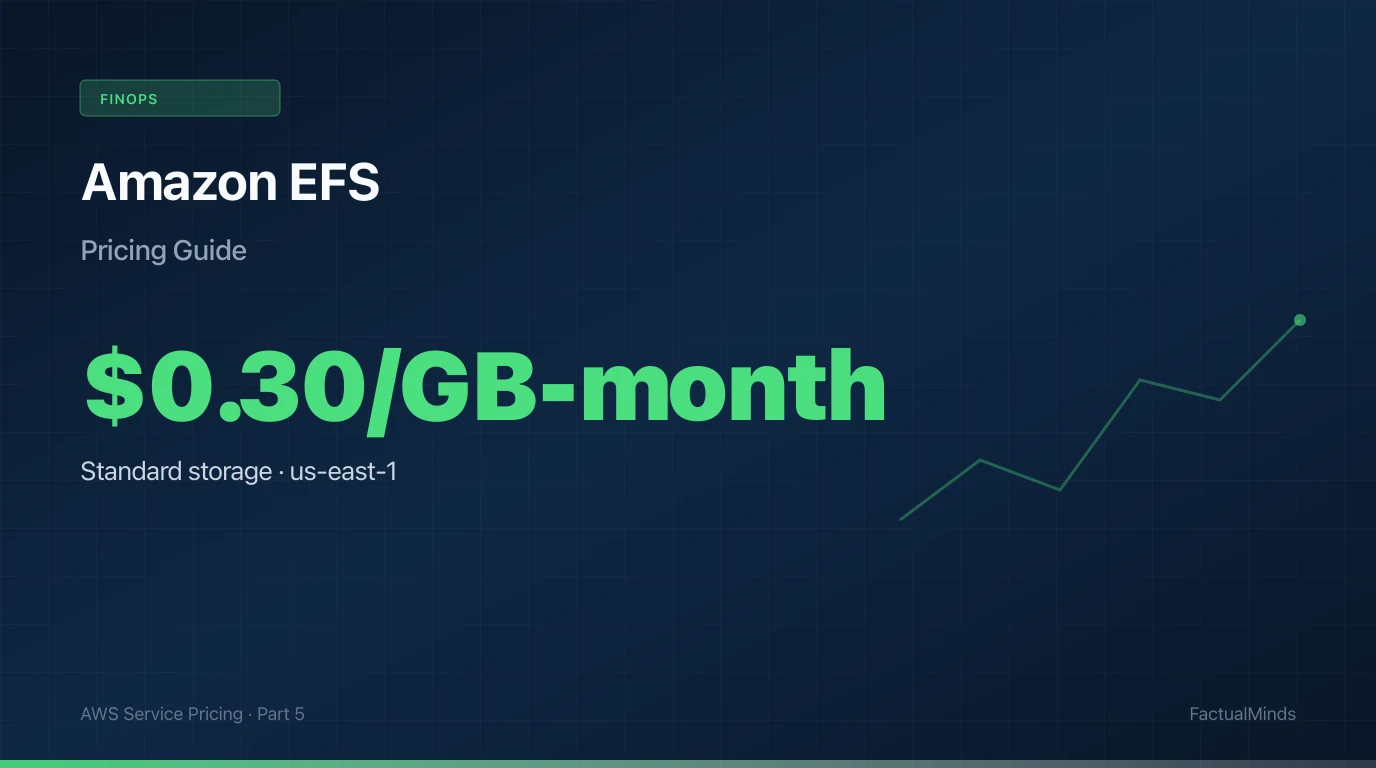
EFS Standard is $0.30/GB-month — over 13× S3 Standard. Standard-IA is 92% cheaper at $0.025; Archive is 99% cheaper at $0.0036. Elastic Throughput (the 2024 default) bills $0.03/GB read and $0.06/GB write per transfer. Throughput mode and storage class decisions, made once at provision time, control the bill more than any usage pattern.